10 days in Poland
- Asaf Feldman
- Dec 1
- 14 min read

A road trip from Warsaw to Krakow In 10 days of touring Poland will take us to Warsaw, Lublin, Tarnow, Krakow, Zamosc and other small villages. Poland seems to be enjoyable, it is very green, has excellent cuisine, and you’ll be quite surprised by its palaces, its landscapes, its rivers, and its people that seemed kind and open.
In the last two centuries the country has experienced a series of invasions by its neighbours. This only served to promote Polish nationalism that has led the people to build a modern country, excellent for living and visiting.
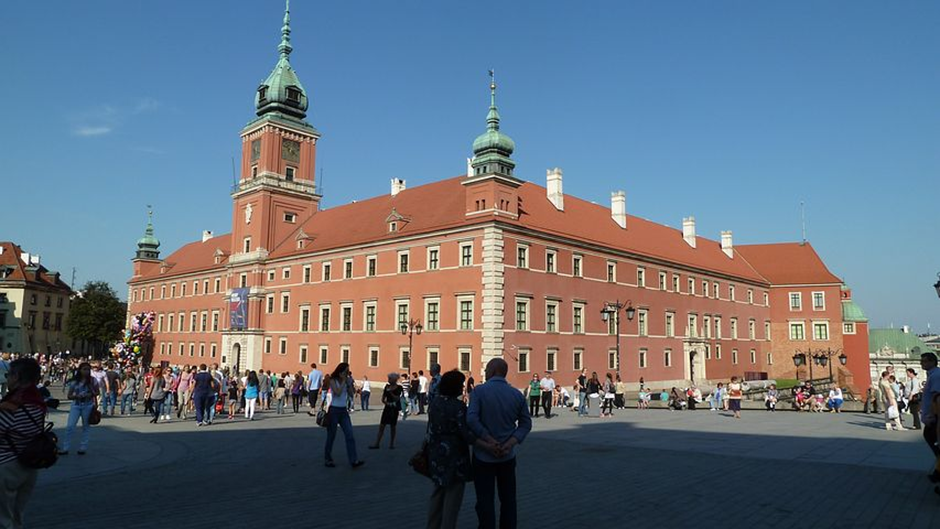
If you arrive in Warsaw in the evening. Before hitting the sheets at the hotel, we recommend watching the light and sound show at the Royal Castle in Warsaw. Fresh up in the morning we shall head to the Palace of Science and Culture (built in 1955) and its surroundings. In the Palace, you'll have a chance to learn about the history of the Polish People and view Warsaw from 114 meters of the ground at the 30th floor observatory.
Now we will continue to the Botanical Garden at Lazienki Palace. The park at the Palace is the largest park in the city, occupying 760000 square meters of the city center. On Sundays there is a Chopin concert to be played at 12 noon. Next to a small pond you will find a monument to Fryderyk Chopin located in front of the main entrance of the park.
Follow the footsteps of Chopin to the Church of the Holy Cross of Warsaw, where 2 of Chopin’s sisters were baptized. Chopin is buried in the Parisian cemetery of Pere Lachaise, though his heart is buried in this church. Another great place to follow in Chopin’s Warsaw is The Presidential Palace in Warsaw, where a small 8-year-old Chopin gave a piano concert on February 24, 1818, leaving the entire audience speechless.
Now a daytime tour of the Royal Castle and the Old town is what will fill your afternoon. We recommend on lunch at the Old Town. If you have time a trip to The Warsaw Rising Museum is worth it. The place opened on the 60th anniversary of the outbreak of fighting in Warsaw. The Museum is a tribute of Warsaw’s residents to those who fought and died for an independent Poland.

Our second day in Warsaw we will visit the Palace of Wilanow. Take buses 116 or 180 all the way through Lazienki Park and arrive at the end in Wilanow. This is the Polish version of Versailles. This beautiful Palace will leave you speechless. The Wilanów Palace of King Jan III was designed in 1677 in the manner of French Baroque mansions.
Wilanów was the favourite residence of King Jan III Sobieski. It was together with the Royal Palace of Łazienki, one of the summer royal residences, part of the Royal Route that I mentioned earlier. In fact, the route starts from the Royal Castle in the old town and ends in Wilanów.
On the first floor there is furniture and decoration from different eras, with Baroque, Rococo and Classicist styles. Different halls can be visited, such as the library, the banquet hall, the rooms of the king and queen, the Etruscan room with numerous ancient sculptures from the Potocki collection.
The upper floor has many portrait paintings of Polish nobility. It is one of the largest and most original in the world. The paintings were made by renowned Polish and International artists. Between the Palace and the lake is a two-level Italian garden and in the southern part an English-style park. The lake is also an unforgettable scenic experience.
In the afternoon, after bathing in royal glory, we shall visit Jewish Warsaw. In Poland before World War 2 lived 3.3 million Jews, the largest community in Europe, in fact more than a fifth of all Jews in the world!! The war eliminated no less than 3 million Polish Jews. Before World War II Jews made up 30% of Warsaw's population, there were hundreds of Jewish schools and libraries, and more than 130 newspapers were published.

We will start the afternoon with a visit to the Polin Museum. It’s exhibits consists of 8 multimedia galleries that cover the first Jewish settlements in the country in the early Middle Ages and the following centuries, passing through the Polish-Lithuanian Confederation of 1572–1795, the Jews of Poland under the Russian Empire, Austria and Prussia, the interwar period 1918–1939, the times of extermination and the renewed Jewish activity after 1989.

After leaving the museum you will find the MONUMENT TO THE HEROES OF THE GHETTO. This commemorates the few survivors of the Warsaw Ghetto Uprising, an uprising that failed. Of the few survivors of the uprising, some fled to the camps near Warsaw, where they hid until the end of the war.
The Nozyk Synagouge is A pre-war synagogue (the only one) that remains active to this day, you can find it on 6 Twarda Street. Another famous address is the street that survived the demolition of the ghetto, Prozna Street. Prozna Street stands as proof of the bitter Nazi invasion. The ancient buildings, which originally belong to the Jews, located on either side of this street are the few residential apartments that have stood the test of time and war. At the end of this day we shall visit the Jewish Cemetery in Warsaw. One of the largest necropolises in the world, with about 200,000 tombstones, where famous rabbis and tzaddikim rest.
Our third day in Warsaw will be dedicated to the sites surrounding the Vistula river. The Vistula River is the longest of those that flow into the Baltic Sea and the most important river in Poland. It rises in the southwest of the country at 1220 m altitude, on the northern slope of the Carpathian Mountains and has a length of 1070 km. The river flows through 8 of the 16 voivodeships of Poland (Silesia, Lesser Poland, Holy Cross, Subcarpathia, Łódź, Mazovia, Kuyavia and Pomerania and Pomerania) and passes through the most important cities of the country (Kraków, Sandomierz, Tarnobrzeg, Puławy, Warsaw, Płock, Włocławek, Toruń, Bydgoszcz, Grudziądz and Tczew).
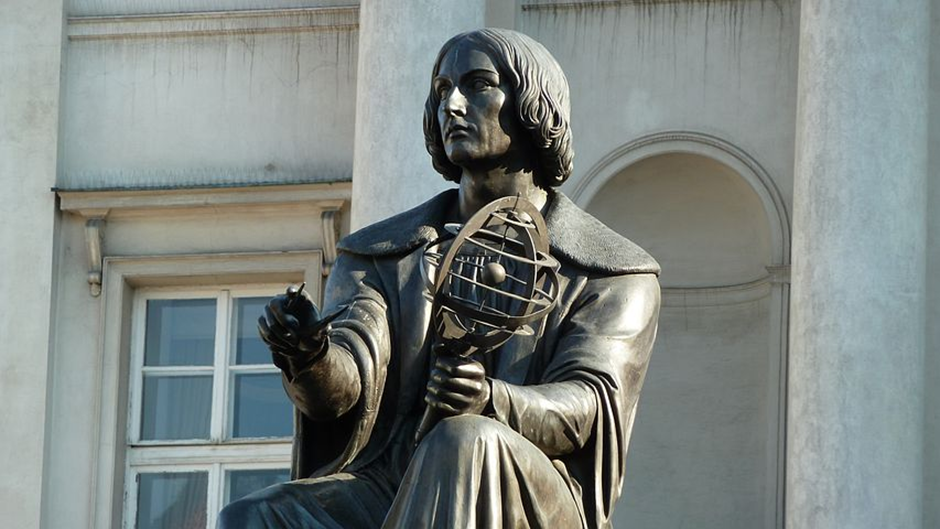
Our first target is going to be the Copernicus Center and the University Library, which are on the left bank of the Vistula looking at the map of the city. The Copernicus Museum in Warsaw is the largest science museum in Poland. Ideal on a visit with children to Warsaw. The University has a library that will only let students go in. But the highlight of the university is the Rooftop garden.

The rooftop garden of the Library of the University of Warsaw is an experimental project. It is the first and largest roof garden established in Poland of its kind. It offers exceptional views to the Vistula River, fragments of the natural declivity, and the buildings situated downhill.
The last stop in Warsaw is the Warsaw National Stadium. The stadium is very modern as it was built for the European Championship in 2012. The good thing is that it is prepared for all kinds of events, from football to motorcycle rallies and concerts. One of the advantages of the stadium is its sunroof that opens in fifteen minutes.

Going South from Warsaw we shall arrive in Lublin in about 3 hours. It has always been a meeting place between cultures of both East and West and since medieval times the city has been an important commercial center. In fact, it was the birthplace of the Polish-Lithuanian Union and for a short period also performed the functions of the capital, at the time of the People's Republic of Poland.
The Jewish community of Lublin was very large, in fact Lublin was known as the Jerusalem of the Kingdom of Poland. The Jewish quarter stretched through the area surrounding the castle. The Jewish community owned a large synagogue called Maharashalshul. Of this synagogue today only a commemorative plaque remains.

In the twelfth century the first castle of Lublin was built on one of the hills called Lublin Castle. A magnificent area for the defence of the city. In the mid-thirteenth century the red stone tower is made and is still preserved. In the 14th century it was fortified by the white walls you see today. Its white walled entrance offers some contrast to the brick structures. Once you enter you can see one of the most significant buildings in the region. It sits at a good vantage point overlooking parts of the city in a restored medieval castle from the 15th century. Inside, there is a Gothic chapel and a museum.
Another area to visit in this castle is the chapel of the Holy Trinity. Erected by King Casimir the Great, its paintings and construction make it one of the most important monuments of medieval art in Europe, in fact it is European Heritage. The walls are decorated with Russian-Byzantine frescoes and of course it is a treasure of world art, as it is testimony to a mixture of cultures between east and west, since the Church is Catholic and is adorned with images of the Fathers of the Church of the East.
Going back to the Old Town you visit the main square for a quick coffee break. In the middle of the square you will find this building where the Civil Registry office is located and was the old town hall of the city. It was founded in 1578 and was the highest court for the nobility of the Lesser Poland Voivodeship.
After a short break, there is lots more to see in Lublin. The Church of the Assumption of the Blessed Virgin Mary the Victorious and the Bridgettines Monastery is one of them. The church was built in the Gothic style. Its peculiarity is asymmetrical division of the interior into two aisles. The original interior was decorated with wall paintings and covered with a flat ceiling, replaced about the mid-16th century by the Gothic cross-ribbed vault.

The Lublin Cathedral. The Cathedral of St. John the Baptist and St. John the Evangelist was built in the years 1586 to 1604 and designed by Italian architects Bernardoni and Brizio. In 1805 the temple became a cathedral when the diocese of Lublin was established. The cathedral is on the outside of what would be the old walls of the medieval city and surrounding them we reach the Krakow Gate. This old gate is an architectural symbol of Lublin that was built as part of the city walls in the early part of the fourteenth century and was the beginning of the road that went from Lublin to Krakow, hence the name.
The Majdanek National Museum is also a must visit to witness the horrors of WWII. where tens of thousands of people from 26 European countries, mostly Polish and Russian Jews, were exterminated. Today you will find a museum that’s not far from the city.

From Lublin we will take a day trip to Zamosc. Zamosc is the ideal Renaissance city. We shall start with the main square of the city. it is one of the most beautiful squares in Poland and is surrounded by houses that have arcades at the top. It was a symbol of the prestige of the city and its Town Hall is integrated into one of those rows of houses, and is next to the square.
Ratusz or the City Council of Zamosc Is the Renaissance town hall that was built in the sixteenth century and remodelled in the eighteenth with the appearance it has today. It has a clock tower 53 meters high and majestic double stairs added in 1767 and is another marvelous building in Zamosc.
The Kamienice ormiańskie are colourful beautiful buildings. This part of Zamość was awarded by the founder of the city, Jan Zamoyski to the Armenians, hence the name of the street and tenement houses. They were created mainly in the middle of the 17th century. They are decorated with bas-reliefs, friezes, ornaments and attics, which were restored during the renovation of the Old Town in the 70s. 20th century under the leadership of architect Victor Zin. At present they house the Zamojskie Museum and the secondary school of Fine Arts.
Zamoyski perfectly understood the importance of university and modern education to the state. And a visit to The Zamoyska Academy is well worth your time. It was inaugurated in 1594 and was the third in importance in Poland. After the first partition of Poland in 1784 it was closed by the Austrian authorities point and today houses the Jan Zamoyski secondary school.

Zamojski Palace is also a very impressive site to visit here. It was built between 1579 and 1587. The style is a continuation of the one created in the city by Bernardo Morando and taken up in the eighteenth century. After 1831 the Palace was converted into a military hospital and from 1918 it became the Palace of Justice. Just behind you can see the MONUMENT to JAN ZAMOYSKI, a 10m high equestrian statue made of bronze. Jan Zamoyski founded the city. The statue was inaugurated in 2005 commemorating 400 years of Zamość.

Our next stop in Poland will be after Jan Tarnowski, Tarnow. If Zamosc if after Zamojski, Tarnow is surely after Tarnowski. Here we will find several dozen historic Gothic, Renaissance and Baroque buildings. Tarnow’s old town has endured surprisingly since the city was founded in 1330. The city had defensive walls and the wealthy inhabitants were engaged in crafts and trade.
The city is called "The Pearl of the Renaissance", and at the time of the Renaissance Tarnów was one of the most beautiful cities in Poland. We will start scouring it in the Main Square. The beautiful parish church, the town hall, the rich bourgeois houses are all in the Square.

The best-known monument in the town is the Cathedral. It dates from the fourteenth century and is built in the neo-Gothic style. It contains the Sepulchral of the Tarnowski and Ostrogski families. It also contains works by masters such as Bartłomiej Berecci, Jan Maria Padovano, Jan Pfister.
Behind it we find the Diocesan Museum. In one of the most beautiful and oldest streets of Tarnów, Dom Mikołajowski, from the year 1524. In this street is the headquarters of the Diocesan Museum. The museum contains extraordinary works: Gothic sculptures, roofs, paintings painted on glass.

After a Cathedral and a Museum it is time for a synagouge. The Old Bimah Synagogoue served half the population of Tarnow in 1939 which were Jewish. From the Main Square we go down Zydowska Street which together with Wekslarska Street forms the oldest part of the Jewish quarter. In that street between June 11 and 19, 1942, about three thousand Jews were killed by the Nazis. Between Zydowska Street and Rybny Square stood the old synagogue. From 1582 until it was destroyed on November 8, 1939 by the Nazis.

Another memorable Jan with addition to Zamoyski and Tarnowski is Jan Szczepanik. He also built the first bulletproof vest. He was born on 13 June 1872 in the Przemyśl region, worked in Berlin and Dresden, died on8 November 1926, was buried in Tarnów. Jan Szczepanik gained much fame with the failed assassination attempt made on the Spanish King Alfonso the XIII. King Alfonso XIII decorated the Polish inventor with the medal of Isabella Católica on June 2, 1902

In this picturesque renaissance city, there are Wooden churches to see. There are two wooden churches in the city. Both are at the ends of Tarnow Cemetery. Blessed Virgin Mary church is a small, wooden church built on a high bank of Vistula River. It was built by not very skilled workers, so the technology had to be simple. Blessed Virgin Mary church, originally dedicated to Our Lady of the Assumption, was likely built in 1458, The Holy Trinity church was erected between 1595 – 1597 aside the road connecting town with the castle and the original route towards Kraków.

We shall visit the house of the famous painter Gabriel Stanisław Morvay now. He was born on July 16, 1934 in Tarnów and died on September 16, 1988 in Sabadell, in Catalonia. He finished the Academy of Fine Arts in Warsaw. At age 24 he escaped the country's communist regime to Paris, then travelled through Europe for a long time, stopping in Rome, Sabadell in Spain and Casalmaggiore in northern Italy. In Tarnów at Urszulańska 27 where he lived for a few years is the memory plaque made by an Italian artist Giovanna Barozzi.

We finally reached Krakow, known today as Paris of Poland. We shall begin with a tour of the old town in Krakow and enter Krakow's Market Square. As soon as you enter this huge square of 200x200m, that is, 40,000 square meters, you will be speechless. You immediately realize that you are in a square that is one of the essential places not in Krakow but in the whole world, in fact it is the largest medieval square in Europe.

On one side of the square you should not miss the Church of San Adalberto. from the eleventh century, making it one of the oldest stone churches in Poland. It belongs to the Polish Romanesque architecture of the early Middle Ages. Continue to the Basilica of St. Mary in Krakow. It is also in the square.
At St. Mary, every hour a trumpeter plays the melody "Hejnał mariacki" from the highest tower. It commemorates the death of the trumpeter who in the thirteenth century warned of the Mongol invasion. An accurate shot pierced his throat. Climb the tower and, apart from incredible views of the square, you will meet one of those trumpeters.

On Wawel hill at the other end of the old town you will find another cathedral of importance. The cathedral with the current structure was built between 1519 and 1533 by Bartolomeo Berrecci. In the center of the cathedral is the mausoleum of St. Stanislaus, patron saint of Poland. The Crypt houses the graves of many Polish kings and national heroes.
Also on this hill is Wawel Castle. For most of the Middle Ages and the Renaissance, Wawel was the seat of national government. Once Warsaw became the capital, the castle was abandoned. In World War 2 it became the residence of the governor-general of Nazi-Occupied Poland.

From here head down to the Jewish Quarter of Kazimierz. The neighbourhood was founded in 1335 by Casimir III, who dreamed of creating a competitive center for Krakow, hence the name Kazimierz. He located it in the Southern District of the old city, between the Vistula River and Dietla Street. At the end of the fifteenth century a powerful Jewish community was installed in it, making it one of the largest centers of the culture of those people in the country.
The heart of Kazimierz is Szeroka Street, which is rather a large square in which four synagogues were formerly located. Today Szeroka Street is a lively place thanks to tourists who come to see the Jewish quarter, the lively restaurants with live music and the party going atmosphere.
The old synagogue was almost completely destroyed during the war but was restored between 1956 and 1959 and is now serving as a museum. The museum houses a collection and exhibition of very interesting objects from the Jewish community. There is a monument to Jan Karski in the remu cemetery here also (Another one is in Warsaw). Jan Karski was in charge of alerting the world to the genocide that the Nazis were causing during World War II.

Let’s stop for some Zapiekanka. The Zapiekanka is half a loaf of bread spread with butter or olive oil and covered with mushrooms, tomatoes, ham or to the consumer's taste, and powdered cheese is poured on top before putting it in the oven for a while. Eating Zapiekanka in Krakow's Jewish Quarter is a must. Around the new plaza there is a lot of partying with bars, pubs and cafes and a lot of nightlife that has turned the neighbourhood into a bohemian and party place for young people.

Krakow is where renowned filmmaker Steven Spielberg chose to shoot some of his footage for the movie Schindler’s List. In the inner courtyard between Jozefa and Meiselsa streets you will find a famous staircase. It is one of the most popular images from Steven Spielberg's movie "Schindler's List." Spielberg shot it in Kazimierz because the ghetto area was completely destroyed after the war.
A prominent’s house to visit is of course the first lady of Beauty, Helena Rubinstein. Chaya Rubinstein, later known as Helena, was born on 25 December 1872 in Podgórze, near Kraków. The Rubinsteins moved to Kraków soon after her birth, and she grew up in the Jewish quarter of Kazimierz. Her house is in Josefa 13 street.
In the area south of the Vistula River, crossing the bridge that comes from Kazimierz, we approach this area that in World War II the Germans used as a ghetto to crowd the Jews into what we now call the Podgorze neighborhood. The first section of the wall is located at Lwowska Street 25-29. The second section of the original ghetto wall is nearby, behind the school at 62 Limanowskiego Street.
In the district of Podgorze visit one of Krakow's most historically important locations, the former Plaszow concentration camp. See the insides of the second largest Nazi concentration camp in Poland where not only Jewish but also Polish, Hungarian, and Slovakian populations were exterminated.

Proceed to the Oscar Schindler Factory Museum. Witness relics from World War II and broaden your understanding of the loss suffered by the Jewish people during the war. It holds an exhibition with a lot of multimedia.
Wow, that was tough! Well let’s ease up on some other touristy attractions not related to war. The Salt Mines of Krakow are nearby and a half-day trip. Take a tour of the historic Wieliczka Salt Mine. This UNESCO World Heritage Site combines nature, history, and art. Walk the labyrinthine passages, marvel at the chapels and chambers, and be wowed by the statues and art installations of the mine. The mines have a depth of 327 meters, and more than 300 kilometres of labyrinthine passages.
But prepare for tougher! After resting in the Salt mines, we have one more place to visit in Krakow, Auschwitz-Birkenau. The place where the most horrific crimes against humanity and megadeath occurred is a must visit if you are in Krakow. 70 kilometers from the city is where humans conjured upon hell. Be sure to visit.


Comments