
The Holy Trail of Composers: A Classical Music Journey Through Northern Europe

Updated: Jan 26
Northern Europe offers countless opportunities to connect with the world’s greatest classical composers. Germany alone produced four major figures of Western music: Johann Sebastian Bach, Ludwig van Beethoven, Robert Schumann, and Felix Mendelssohn. Nearby Austria, Czechia, Poland, and Hungary contributed many more, making this region the historic heart of classical music.
This area seems to possess a unique cultural force that shaped centuries of musical innovation. Its societies invested deeply in art, education, and performance, producing a classical repertoire that continues to lead the global music scene. Germany, located in Northern Europe and bordering Poland, Czechia, Austria, and Belgium, covers 357,022 square kilometers and is home to over 80 million people. Its size and population help explain how so many influential composers emerged there.
In Poland, the most celebrated composer is Fryderyk Chopin. Born near Warsaw, his childhood home is still used for concerts featuring his famous piano works. Poland covers 312,696 square kilometers and has a population of around 40 million. Chopin’s output includes solo piano works, waltzes, sonatas, and orchestral music, and no piano recital or encore feels complete without at least one of his pieces.
The Czech Republic, a landlocked country of 78,000 square kilometers, produced major composers such as Bedřich Smetana, Leoš Janáček, and Antonín Dvořák. For classical music enthusiasts, it offers rich opportunities to follow their legacies. Even beyond music, Prague ranks as the fifth most visited capital in Europe. Czech musical culture is deeply rooted in classical traditions across all historical periods.
Another essential figure on this journey is Franz Liszt of Hungary, a former empire and a landlocked country covering 93,030 square kilometers with a population of 10 million. Liszt emerged in the 19th century alongside Chopin and enjoyed a career spanning more than six decades. Known for his physical presence and extraordinary hands, Liszt redefined piano technique and harmonic language.
Austria completes this core region as the birthplace of Wolfgang Amadeus Mozart and Franz Schubert. Nestled in the Eastern Alps, Austria is a small landlocked country with an outsized musical legacy. In Salzburg, Mozart’s father Leopold trained him from birth, and by age four he was already composing. With an output rivaling that of his German contemporaries, Mozart produced more than 600 works, including symphonies, operas, choral music, chamber works, piano sonatas, concertos, string quartets, masses, serenades, and more, securing his place as one of the greatest composers of all time.


Berlin: Gateway to the Composer Trail
Let’s begin than. Berlin would be a great place to start our trip as most of Europe is accessible from that city for a reasonable price. In the morning take a 4 hour train to Leipzig, the city of Johann Sebastian Bach. If you require some adjustment or are coming from a far and staying in Berlin for a couple of days, be sure to catch the world-renowned Berliner Philharmonic playing a concert. Tickets can go from as cheap as 10 euros to 50 euros for the best sit in the house. The sound of the house of the philharmonic is like no other.

Leipzig: Johann Sebastian Bach
When in Leipzig we will start at Augustusplatz, the main and largest square in Leipzig. Marvel at the Opernhaus and Leipzig University buildings as we walk towards Saint Nicholas Church. In the 18th century, several works by Johann Sebastian Bach, who was the music director of Thomaskirche and Nikolaikirche from 1723 to 1750, premiered here. The Organ in Saint Nicholas is the largest one in Saxony. We shall now visit St. Thomas Church, Bach served as the choirmaster at this church(to which his grave was moved in 1949) for the last 27 years of his life.
And if we are already in Leipzig celebrating Bach, a trip to Bach Museum is a necessity. This is an excellent museum with a focus on J.S.Bach. It contains information on his music and the Bach family. The museum has some excellent interactive exhibits also which allow you to hear a specific instrument in a Bach composition or compose your own music. Be sure to report to Instagram after visiting the Bach monument in Leipzig with a picture of the Bach Monument. To the ones who are heavy in Bachmania you can also visit the AltesBach Monument which is a monument to commemorate the older family members of the Bach family.
Key sites include:
Augustusplatz with the Opera House and Leipzig University
St. Nicholas Church, where Bach premiered several works
St. Thomas Church, where Bach served as choirmaster for 27 years and where his grave lies
Bach Museum, featuring manuscripts, instruments, and interactive exhibits
Bach Monument, a must for music travelers

Bonn: Ludwig van Beethoven
Our next hero of classical music is the one and only Ludwig Van Beethoven. We will take a 5 hour train ride to his birth place Bonn to follow in the footsteps of this remarkable achiever. Born in December 1770, LVB spent the first 22 years of his life there. For our Instagram fans we have a statue in his honor built by the support of nonother then Franz Liszt and situated where we will arrive in Bonn, Munster Square.
Beethoven’s birthplace, originally built around 1700, has survived the ravages of time and is one of the few remaining old houses of Bonn. The small building with its pink baroque facade still stands at Bonngasse 20. Born in one of the attic rooms, Ludwig was named after his Dutch grandfather Ludwig van Beethoven, today it is a museum, the Beethoven-Haus Museum.

Now we shall arrive at St. Remigius Church , Bonn, where Ludwig van Beethoven was baptized here on 17 December 1770. After making the pilgrimage here we shall go to the venue where young Beethoven played for Joseph Haydn, Redoute Palace. You are now where Princess Diana and the Shah of Persia visited and listened to works like Mozart’s “The Magic Flute”
Another favorite of our Beethoven are the Roisdorf healing water Fountain. To keep healthy Beethoven and his family took the waters on occasion. The Roisdorf mineral fountain not only offers excellent mineral water, but also a nice little park with a pond and pavilion, which is popular with visitors.
We shall end our footsteps following Beethoven’s tour in Drachenfels(Dragon’s rock). From here, there’s an enthralling view of the mythical hills and the panorama across the Eifel and Westerwald mountains. This craggy rock crowned with the romantic ruins of a 12th-century castle has long been tied to myth and has inspired artists and writers including Lord Byron and Heinrich Heine, as well as Beethoven.
Key sites include:
Beethoven Monument at Münsterplatz
Beethoven House Museum, his preserved birthplace on Bonngasse
St. Remigius Church, where Beethoven was baptized
Redoute Palace, where Beethoven performed for Joseph Haydn
Roisdorf Mineral Fountain, a health retreat Beethoven frequented
Drachenfels, a scenic viewpoint that inspired artists and composers

Zwickau: Robert Schumann
Next on our list of discoveries of great composers of Northern Europe is Robert Schumann. We shall head back to Zwickau via Leipzig from Bonn and discover the birthplace of Schumann. We shall start in Zwickau at the Robert Schumann haus. From here we shall visit Hotel „Zur grünen Tanne“. Robert Schumann came here both as a high school student and on his later visits to Zwickau and attended concerts by the Casino Society. On December 6, 1835, Clara Wieck gave a concert in the “Green Tanne Casino Hall”. Today a commemorative plaque commemorates this performance.

Now we shall head to „Grünhainer Kapelle“ und Lyzeum. The most famous student at the Lyceum from 1820 to 1828 was Robert Schumann. He finished with "omnio digitus", which means something like "limited praise for good systems". After we will head off to the monument after Schumann Robert-Schumann-Denkmal, and then to the approximate place which was destroyed in WWII of where Schumann grew up and wrote his first poems Schumanns Jugendhaus. To end we shall visit the convervatorium named after him Robert-Schumann-Konservatorium.
Important stops:
Robert Schumann House Museum
Hotel Zur Grünen Tanne, site of Clara Wieck’s concert
Grünhainer Kapelle and Lyceum, where Schumann studied
Robert Schumann Monument
Robert Schumann Conservatory

Prague: The Musical Capital
Our next destination is Prague, the Czech capital where we will meet and mingle where composers Smetana and Dvorak used to. Take a break at Smetana’s Municipal house and listen to a concert. Almost every day there are performances. Go to the Rudolfinom to see the Czech philharmonic conduct music by these famous composers and bask in the glorious of Dvorak Hall, named after the composer.
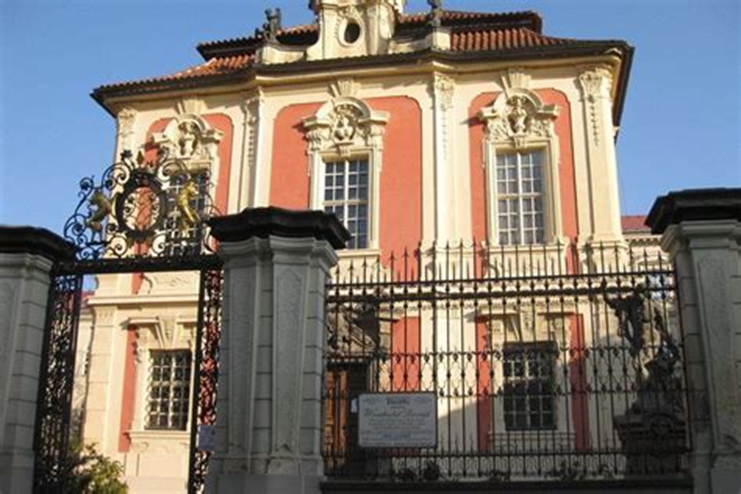
Take a personal and up-close tour with Dvorak when you can visit his largest home in Prague and the apartments, he used to live in. The composer’s largest home in Prague is now a museum. In it you can see his piano, ceremonial robes from his honorary doctorate from the University of Cambridge, writing desk, photographs, documents, and more.
If you really wish to pay respect to these wondeful composers and other Czech prominent figures you can take the subway to Dvořák’s Grave. In Vysehrad Castle (the old castle), there is a cemetery with the graves of Dvořák and Smetana. This ancient castle is not as frequently visited as Prague Castle but is worth a visit.
Highlights:
Municipal House, concerts dedicated to Smetana
Rudolfinum, home of the Czech Philharmonic and Dvořák Hall
Antonín Dvořák Museum, featuring personal artifacts and manuscripts
Vyšehrad Cemetery, where Dvořák and Smetana are buried

Austria: Mozart and Schubert
From Prague we shall now head down to Salzburg. In Salzburg, we visit Mozart’s childhood homes and stroll on the streets where the talented youngster grew up. Visiting the Birth House Museum, We will stand in the room where Mozart was born on January 27, 1756. A true homage to a great composer. There is also information about Opera’s and certain works by Wolfgang to be discovered here. Mozart’s Apartment Museum in Salzburg Is where he lived as a teenager and also worth a visit. You will find 4 keyboards there and a movie about his teenage years.
For the Instagram lovers, we shall now see the monument of Mozart erected in 1844. Nearby, is the Salzburg Cathedral, where Mozart was baptized. St Peters Church is where the Mass in C Minor was first played in 1783. Finally we will enjoy coffee and some delicious cakes and pastries In the café Tomaselli, mentioned in Mozart’s letters as a place he used to hang out it.
Mozart Birthplace Museum, where he was born in 1756
Mozart Residence Museum, his teenage home
Mozart Monument, erected in 1844
Salzburg Cathedral, where Mozart was baptized
St. Peter’s Church, site of the Mass in C Minor premiere
Café Tomaselli, mentioned in Mozart’s letters

Vienna: Franz Schubert
After visiting the great Mozart we shall continue to Vienna, where a prominent composer named Franz Shubert was born. It is about a three-hour ride to the capital and one of the most exciting cities for classical music. Two museum’s capture the life of Shubert. The Birth House Museum, Schubert was born in the little kitchen (left) in a house on Nussdorferstrasse, and Apartment museum where Shubert died. In the first we can see his piano, and in the latter some extremely touching letters.
After his death, Schubert was buried next to Beethoven in what is today called “Schubert Park”, just down Währingerstrasse from the Volksoper. In the 1880’s, the remains of both composers were moved to the newly opened Central Cemetery. Schubert’s final resting place is in the section of the cemetery dedicated to the great composers: Beethoven, J. Strauss, Brahms, and others. His tomb was designed by Theophil Hansen, the architect who designed the Musikverein and Parliament.
For our Instagram enthusiasts, be sure to visit Schubert Statue in Stadtpark. One of the nicer statues of the composer is in Vienna’s Stadt Park, not too far from the famous golden statue of Johann Strauss, Jr., the “Waltz King”.
Schubert Birthplace Museum on Nussdorferstrasse
Schubert Apartment Museum, where he died
Währing Cemetery, original burial site near Beethoven
Central Cemetery, final resting place among Beethoven, Brahms, and Strauss
Schubert Statue in Stadtpark
Unfinished Symphony Apartment, where Schubert composed his famous work

And to finish with this wonderful composer we will finish with the Unfinished Symphony. The Apartment where Schubert wrote the “Unfinished” Symphony. Schubert lived here in 1823 and 1824. The plaque in front of the building is one of the few images of Schubert without glasses. Next door was the long-time home of Antonio Salieri.

Hungary: Franz Liszt
Our last to final stop will be Franz Liszt’s Hungary and city of Budapest. Franz Liszt was a virtuoso pianist and composer who spent much of his life in Budapest. The Liszt Museuam, near the Opera house, was the nicest of Liszt’s homes. You can find furniture, awards, pianos, and even a small Bosendofer top drawer keyboard that was given to him by the Bosendorfer.
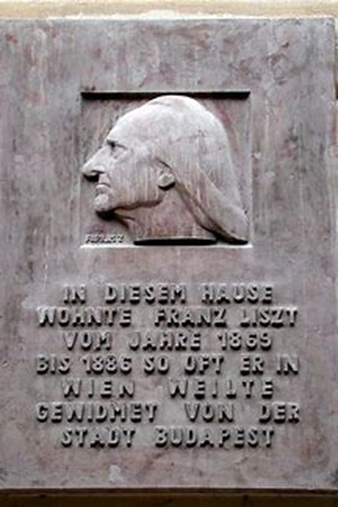
Statues of Liszt are to be found in the Opera house. And not far we can find another museum that represents a lot of the composer’s life and output, the Museum of Musical History. Liszt visited Vienna several times. During one of these visits, he stayed in the Schottenhof, marked by this plaque.

Poland: Fryderyk Chopin
Finally for our last composer, we shall head back north to Warsaw. Polish French composer and pianist of the Romantic period, best known for his solo pieces for piano and his piano concerti. When Frédéric was eight months old, his father Nicholas became a French teacher at the Warsaw lyceum. Chopin himself attended the lyceum from 1823 to 1826. Today it doesn’t exist unfortunately.
A day tour visiting this wonderful composer can be described as such: Pick up from your hotel in Warsaw by a tour guide. Head 1 hour West of Warsaw to Żelazowa Wola village. Sightseeing of Chopin's Birth Place Museum. Return to Warsaw with the possibility of a lunch break. Marvel at the Frederic's Chopin Museum in Ostrogskich Palace. For Instagram lovers Transfer to Royal Baths Park, photo session by Chopin's Monument. There is possibility to arrange a Chopin's music concert on request.
Why This Composer Trail Is Worth Traveling
This journey is not about ticking landmarks. It is about understanding how place shapes sound, emotion, and creativity.
Northern Europe offers:
Dense musical heritage
Accessible transport
Active concert culture
Deep historical continuity
For classical music lovers, this is one of the most meaningful cultural routes in the world.


Comments