
Albania -South to North


Stretching along the Ionian Sea, the Albanian Riviera is the country’s crown jewel. This is where Albania competes directly with places like southern Italy or Greece, but at a fraction of the price and with far fewer crowds.
Ksamil offers turquoise water and small offshore islands you can swim to. It feels almost Caribbean at times.
Himara strikes a balance between laid-back beach town and authentic village life.
Dhermi combines dramatic mountain backdrops with long, clear beaches—ideal for those who want both scenery and nightlife.
Driving along the coastal road (the SH8) is an experience in itself. The road climbs high into the mountains before dropping sharply to the sea, revealing panoramic views that rival any coastal drive in Europe.

Ksamil Beach and Southern beaches
Offers turquoise water and small offshore islands you can swim to. It feels almost Caribbean at times. At summer gets very crowsded and prices are going up. The main beaches are Bora bora beach,Poda Bay Beach, and Ksamil beach itself in the heart of the village. There are parts of the beaches which are public but at the rest you have to pay around 10-30 Euros for beds and unbrellas.
Albania’s southern coastline also hides a series of smaller, less-commercial beaches that often end up being the highlight of a trip. The stretch between Sarandë and Ksamil, in particular, is packed with coves that feel more like discoveries than destinations.
Himare
less chaotic than Ksamil, more relaxed than Sarandë, and significantly more spacious than many hidden coves further south. Within a short driving distance you get long sandy stretches, turquoise swimming bays, and semi-hidden coves backed by rugged hills.
Livadhi Beach Is definitly worth visting here. It’s long, open, and significantly less cramped than the town beach.

Borsch and Porto Palermo
The beach in Borsch itself is a long arc of pebbles mixed with sand, backed by olive trees that sometimes grow almost right up to the shoreline. The water is deep, clear, and usually calmer in the mornings. You can walk for 30–40 minutes and still feel like you’ve barely moved through the landscape.
There are some good family run restaurants there and one is Carpe Diem Beach, Borsh, Albania. Good beach food. Beautiful experience, especially for families with children
Porto Palermo on the other hand is a small, sheltered bay on the Albanian Riviera known for its striking Ottoman-era fortress and unusually calm, deep-blue waters. Located between Himara and Borsh, it combines history and nature in a compact setting: a stone castle attributed to Ali Pasha sits on a narrow peninsula, surrounded by a quiet, enclosed sea that feels more like a natural lagoon than an open coast. The area is minimally developed, with little infrastructure, which preserves its raw, atmospheric character. It’s not a typical beach destination but rather a place for swimming in still waters, exploring the fortress, and enjoying a quiet, almost timeless coastal landscape.

Apollonia – Ancient City on the Road to Vlorë
Apollonia was a major Greek and later Roman city founded in the 6th century BC by settlers from Corfu and Corinth. It became one of the most significant urban centers in the region, especially during Roman times, when it was a key administrative and cultural hub.
Today, it’s a large archaeological park set on rolling hills above the Myzeqe plain.
The archeological site extends across several hills planted with olive trees. Main points of interest are the Bouleterion and the Temple of Agonothetes.

Vlorë
Moving on Northwards ont he Riviera we reach Vlorë . Vlorë is a major coastal city in southern Albania where the Adriatic and Ionian seas meet, making it both a historic port and a gateway to the Albanian Riviera. It combines a long seaside promenade, urban beaches, and a growing modern waterfront with nearby access to natural highlights like the Karaburun Peninsula and Sazan Island. Historically significant as the place where Albanian independence was declared in 1912, Vlorë blends national heritage with a lively summer atmosphere, offering restaurants, nightlife, and ferry access alongside more relaxed coastal areas just outside the city.
In Vlore you can experience the promenade and many cafes or just hop on a trip to the Island. A boat trip from Vlorë to Sazan Island and the Karaburun Peninsula is one of the most striking experiences on the Albanian coast, combining military history with untouched nature. Sazan Island, once a closed military zone, offers a glimpse of abandoned bunkers and a strategic Cold War past, while Karaburun delivers dramatic cliffs, sea caves, and hidden coves accessible only by boat. The water throughout the area is exceptionally clear, shifting from deep blue to turquoise near the shore, making it ideal for swimming, snorkeling, and exploring remote beaches far from any infrastructure.

Berat
Berat, a UNESCO World Heritage city in central Albania, is known as the “City of a Thousand Windows” for its distinctive Ottoman houses stacked along the hillside, their large windows creating a unique layered façade. The town is divided by the Osum River, with historic neighborhoods like Mangalem and Gorica connected by a stone bridge, while above them rises Berat Castle, still inhabited and offering panoramic views. Walking through Berat feels like stepping into a preserved past, where cobbled streets, Byzantine churches, and mosques reflect centuries of cultural coexistence, making it one of the most atmospheric and historically rich destinations in the country.
A visit to Berat often begins with a climb toward Saint Michael's Church, a small but striking church perched on a steep rock just below the citadel, offering an early glimpse of the city’s layered beauty. Continuing upward leads into Berat Castle, which feels less like a fortress and more like a living village spread across 10 hectares of narrow, cobbled streets. Inside, you’ll find a quiet maze of old houses, churches, a minaret, and locals selling handmade goods like honey and lace. One of the highlights is the Onufri National Icon Museum, home to a rich collection of religious art, including works by Onufri, a 16th-century master known for bringing realism and unique colors, like pink, into icon painting. Exploring the citadel is both a cultural and sensory experience, especially as you descend back toward the city with panoramic views over the Osum River.
Below the castle, Berat unfolds into its iconic districts. The Mangalem Quarter, with its tightly packed white Ottoman houses and countless windows, gives the city its nickname, the “City of a Thousand Windows.” Across the river lies the quieter Gorica Quarter, historically home to Orthodox Christians, where houses are more spaced out and often surrounded by gardens. Connecting the two is the elegant Gorica Bridge, a 129-meter pedestrian bridge offering classic views of both sides of the city, along with a nearby suspension bridge that adds a modern contrast. Together, these neighborhoods create a harmonious blend of history, architecture, and everyday life, making Berat one of Albania’s most visually and culturally captivating destinations.

Durrës
Durrës is one of Albania’s oldest and most historically layered cities, yet it’s also one of its most accessible and easygoing coastal destinations. Once chosen as the capital of the Principality of Albania between 1913 and 1920, Durrës has long been a strategic and economic hub thanks to its position on the Adriatic Sea. Today, it remains the country’s main port and a gateway for trade and travel, while its long sandy beaches and relaxed seaside atmosphere make it a popular summer escape. Although modern development, especially rows of hotels and resorts along the coast, has reshaped parts of the shoreline, the city still retains deep connections to its past beneath the surface.
At the heart of that history lies the impressive Durrës Amphitheatre, the city’s most iconic landmark. Built in the 2nd century during Roman rule, it once held up to 20,000 spectators, making it the largest amphitheatre in the Balkans. Partially hidden for centuries and rediscovered in the 20th century, it now reveals layers of history, including early Christian chapels and intricate mosaics. Beyond the amphitheatre, visitors can explore remnants of Byzantine walls, the Venetian Tower, and the Archaeological Museum, which together tell the story of a city shaped by Greek, Roman, Byzantine, and Ottoman influences. Durrës may not have the untouched charm of smaller Riviera towns, but its blend of beach life, history, and urban energy gives it a distinct character that’s both lively and culturally rich.

Tirana
Tirana, Albania’s capital, is often skipped by travelers but it deserves at least a day or two. The city can feel chaotic, especially with its heavy and sometimes unpredictable traffic, so driving in the center isn’t ideal. Still, beyond the disorder lies a city with real character. Around Skanderbeg Square, you’ll find the heart of Tirana, surrounded by landmarks like the National Historical Museum, the Clock Tower, the Et'hem Bey Mosque, and the Palace of Culture. The area blends history with modern energy, including bold new architecture like Tirana's Rock, a unique skyscraper whose shape subtly forms the face of Albania’s national hero depending on the angle.
A short walk away, Pazari i Ri (New Bazaar) offers a more local and authentic atmosphere, with fresh produce, traditional foods, and lively cafés where you can experience everyday life. For a quick escape from the city, the cable car to Dajti Mountain National Park provides panoramic views and a peaceful natural setting just minutes away. This contrast between urban intensity and nearby nature is part of what makes Tirana so dynamic.
The city also reveals Albania’s complex past through powerful sites like Bunk'Art 1 and Bunk'Art 2, museums built inside massive Cold War bunkers from the era of Enver Hoxha. These spaces tell the story of a highly isolated regime that left behind hundreds of thousands of bunkers across the country. Another symbol of that time is the Pyramid of Tirana, once a monument to Hoxha and now being transformed into a modern cultural hub. Tirana’s appeal lies in this mix of past and present—raw, evolving, and unexpectedly fascinating.
Shkodër
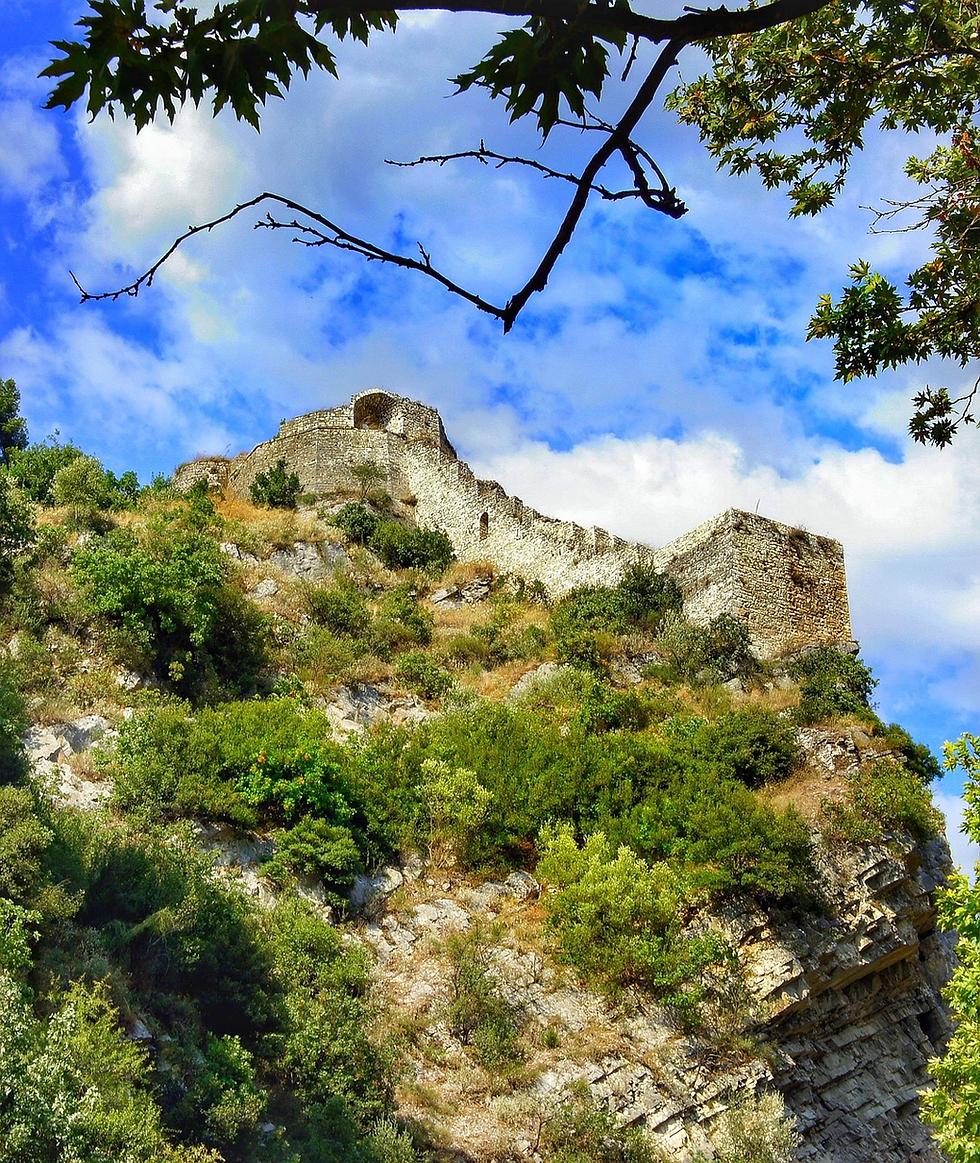
Shkodër, located in northern Albania near the shores of Lake Shkodra, is one of the country’s oldest and most culturally rich cities, known for its laid-back atmosphere and strong artistic identity. Often considered the gateway to the Albanian Alps, it blends history, nature, and tradition, with highlights like the impressive Rozafa Castle, offering sweeping views over rivers and mountains, and a charming pedestrian center filled with cafés and historic buildings. The city has deep roots in Albanian culture, particularly in photography, music, and religion, reflecting both Catholic and Muslim influences. With easy access to nearby natural wonders like the Alps and Lake Shkodra, Shkodër is an ideal starting point for exploring northern Albania while enjoying a slower, more authentic urban experience.
💰 Money in Albania (Lek)
Cash is far more important in Albania than many travelers expect. While you might assume cards are widely accepted, in reality many places—especially smaller restaurants, guesthouses, and beach spots—still operate mostly in cash. Relying only on a credit card can quickly become inconvenient. ATMs are available, but withdrawals can come with surprisingly high fees, particularly from foreign cards, so it’s not the most cost-effective option.
A better approach is to arrive with euros and exchange them locally at reputable exchange offices, where rates are usually fair if you check in advance for commissions. The local currency is the Albanian lek, and having it on hand makes everyday transactions much smoother. Some businesses do accept euros, but prices are often rounded up, so you’ll typically get better value paying in lek.
Roads in Albania
Driving in Albania can be slow and unpredictable: roads are often very winding, sometimes in poor condition or under construction, so even short distances can take much longer than expected (e.g., 150 km can take nearly 4 hours). Speed limits are enforced in a rather old-fashioned way.


Comments